5 Things Behind JTeles' 20 Million Cloth Farmer Run in Rust
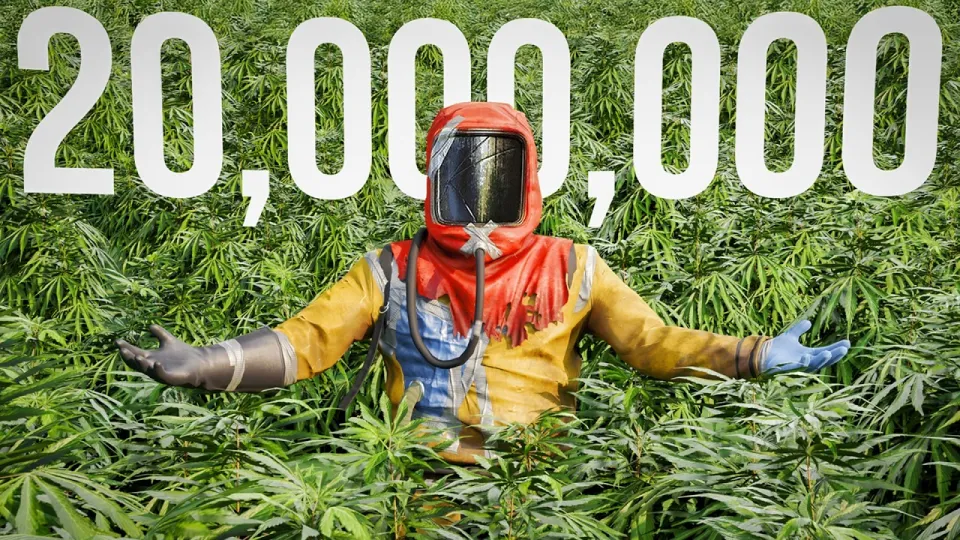
Video: I Became Rust's #1 Farmer...
You can order the same kind of articles for your own video to boost it on YouTube and Google. Just message the Telegram bot @sat_sit_bot. The bot writes and publishes the articles itself (with your YouTube video embedded) on popular topical websites (no ads). Free trial — 50 articles.
Rust farming runs usually mean a few boxes of hemp and a quiet corner of the map. JTeles pushed the idea to its limit: starting with 126,000 cloth and a target of 20,000,000 cloth in a single wipe, he invited viewers onto the server to build what he calls the biggest cloth farm in Rust and try to finish inside 7 days. The attempt turned into a full server war, with a large Russian clan doing everything it could to stop the build. Anyone who wants to follow the creator's own links can grab the free War Thunder bonus at the JTeles registration page.
What the 20 million cloth challenge actually required
Cloth in Rust comes from hemp plants, and turning a few thousand into twenty million is a logistics problem before it is a farming one. A single hemp plant yields a handful of cloth depending on genetics and growth stage, so the math pushes you toward hundreds of planters, constant planting and harvesting, and a base big enough to hold the output. The run's starting stock of 126,000 cloth is roughly what a solo player might collect across an entire wipe — JTeles treated it as seed capital for a factory.
The plan had three parts: scale the farm far beyond normal base sizes, keep the planter-to-box pipeline running around the clock, and recruit enough helpers to survive the attention the project attracted. That last part is what turned a farming video into a PvP story.
How viewers were pulled into the server
Instead of farming alone, JTeles opened the server to his audience and turned the project into a group effort. Viewers joined as farmers, builders and defenders, which is how the compound reached a scale no single player could maintain. The division of labour mattered: someone had to plant and harvest while others watched the perimeter, and the base had to keep producing while the creator slept.
That setup explains a detail viewers noticed immediately — the compound became so large and dense that looking at it in one direction caused visible server lag. A farm of that size is effectively a small settlement, with its own storage, power and defensive layout.
Why a Russian clan declared war on the farm
A project this visible does not stay secret. According to the video's setup, a massive Russian clan learned what was being built and committed to stopping it, which produced raids, open PvP, base defense and shifting alliances across the server. The farm became a target not because cloth is precious, but because a giant, laggy, player-filled compound is an obvious trophy.
The result is a run that mixes farming with the parts of Rust people usually watch for combat: online defenses, counter-raids, and negotiations with other groups who either wanted the farm gone or wanted a share of it.
The clan defense that made the run possible
A seven-day goal cannot be met by one person who also needs sleep. The teammates who held the base while JTeles was offline became the most praised part of the video, and for good reason: an undefended mega farm is a loot piñata. Holding a compound through the night requires stocked defenses, ready kits, and players willing to take a fight at 4 a.m. against a clan that outnumbers them.
That is the less glamorous side of any record-chasing farm in Rust. The headline number is cloth; the actual work is scheduling, trust and a defense that does not collapse the moment the owner logs off.
Typical viewer questions about mega farms
Long-time players pushed back on the scale with their own experience. One recalled building a 1,008-planter farm on a 5x server before the plant-all and harvest-all quality-of-life updates, planting and harvesting every plant by hand — about 3 hours each way — for roughly 17.4 million cloth and a base that lagged heavily.
The comparison is useful for anyone thinking of trying it:
- Vanilla rates make a 20 million cloth target a multi-day, multi-player operation, not a solo grind.
- Server multipliers change the math completely; a 5x or 10x server can compress days of work into hours.
- Automation and mass-planting tools reduce the click workload but do not remove the need for storage and defense.
- The bigger the farm, the more the server itself becomes a limiting factor through lag.
Viewers also joked about the sheer length such a grind could take in other creators' hands, and about the physical cost of a seven-day push — one memorable moment has JTeles stepping outside for the first time since wipe and being startled by daylight.
All links from the video
- Free War Thunder bonus for PC and consoles: https://wtplay.link/jteles
- War Thunder mobile: https://wtm.game/jteles
- JTeles Discord: https://discord.gg/jteles
- Twitter/X: https://twitter.com/xJTeles
- TikTok: https://www.tiktok.com/@xjteles
Final thoughts on Rust's cloth farming record attempt
The run works because it treats farming as a team sport: 126,000 starting cloth, a 20,000,000 target, a seven-day clock and an audience turned into a workforce. The opposing clan supplied the conflict, and the offline defense supplied the drama that a pure farming video would lack. JTeles is the author of this breakdown and the creator behind the experiment, and his channel is where the full raid-by-raid story plays out. If you want to support the creator's sponsors, the War Thunder sign-up link is the one featured in the video.
Key takeaways
- JTeles started the wipe with 126,000 cloth and set a goal of 20,000,000 cloth in a single wipe.
- The deadline was 7 days, with viewers invited onto the server to help build and defend the farm.
- A large Russian clan found out about the project and attacked the farm with PvP, raids and base defense fights.
- The finished compound grew so large that it visibly lagged the server when rendered on screen.
- Clan members defended the base while JTeles was offline, which the audience singled out as the run's MVP moment.
Source: I Became Rust's #1 Farmer... · Markdown version
Questions & answers
How much cloth did JTeles farm in the video?
The stated goal was 20,000,000 cloth in a single wipe, starting from 126,000 cloth already collected. The run was framed as an attempt to become Rust's number one farmer, with a seven-day deadline to reach the target.
How long does farming 20 million cloth take in Rust?
On vanilla rates it is a multi-day job for a group, not a solo player, because hemp yields only a few cloth per plant and needs constant replanting. On boosted servers the math shrinks fast: one player reported a 1,008-planter farm on a 5x server producing about 17.4 million cloth with roughly 3 hours of planting and 3 hours of harvesting by hand.
Why did a clan attack the farm?
A large Russian clan found out about the project and tried to stop it, which led to raids, PvP fights, base defense and alliances across the server. A giant, well-stocked compound is a high-value target regardless of what it produces.
Who defended the base while JTeles was offline?
Viewers who joined the server as part of the project held the compound during offline hours. Their defense is widely credited as the reason the farm survived long enough to keep producing toward the 20 million goal.